























Choosing a Good Laptop for Software Development in 2026
The hum of a high-spec machine processing complex code, the satisfying click of a responsive keyboard, the clarity of a crisp display showing your creation come to life – this is the developer’s daily symphony. But what if your current setup is more of a discordant noise than a harmonious tune? If you’re on the hunt for a good laptop for software development, you’ve landed in the right spot. In 2026, the demands on our development machines are only growing, from AI-driven coding assistants to increasingly complex cloud-native applications. This complete guide will equip you with the knowledge to select a laptop that not only meets but exceeds your development needs, whether you’re a seasoned pro in Manchester or just starting your coding journey in Berlin.
what’s the best laptop for software development in 2026?
The best laptop for software development in 2026 is typically a powerful, portable machine featuring a high-performance CPU (like an Intel Core i7/i9 or Apple M-series chip), at least 16GB of RAM, a fast SSD storage (512GB or more), and a comfortable, backlit keyboard. While Apple MacBooks and high-end Windows laptops are popular, the ideal choice depends on your specific development stack, budget, and operating system preference.
Core Components: The Engine of Your Development Rig
Here’s what you need to knowto the heart of what makes a laptop suitable for software development. These aren’t just specs. they’re the building blocks of your productivity and sanity.
Processor (CPU): The Brains of the Operation
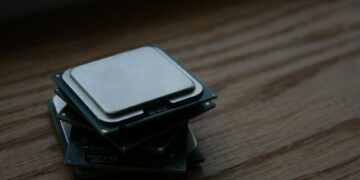
The CPU is where the heavy lifting happens. Compiling code, running virtual machines, and multitasking across various development tools all rely on its power. For a good laptop for software development, you’ll want a modern, high-performance processor.
- Intel: Look for Intel Core i7 or i9 processors from the 12th generation (Alder Lake) or newer. These offer a hybrid architecture with performance-cores and efficient-cores, providing excellent power for demanding tasks while managing battery life.
- AMD: AMD’s Ryzen series, especially the Ryzen 7 and Ryzen 9 (e.g., 6000 or 7000 series), are strong contenders. They often provide competitive performance, especially in multi-threaded workloads, and can offer better value.
- Apple Silicon (M-series): For those in the Apple ecosystem, the M1, M2, and the newer M3 (and their Pro/Max variants) chips in MacBooks are incredibly efficient and powerful. They excel in tasks like compiling code and running development environments, often with superior battery life. According to Apple, the M3 Pro chip offers up to 40% faster CPU performance compared to the M1 Pro.
Avoid lower-end processors like Intel Core i3 or AMD Ryzen 3 unless your development work is extremely basic (e.g., simple web development with minimal tooling). Developers often need to run multiple applications simultaneously – an IDE, a browser with many tabs, a local server, a database, and possibly a virtual machine. A weak CPU will lead to frustrating slowdowns and long compile times.
Memory (RAM): Your Workspace Size
RAM is like your desk space. The more you have, the more you can spread out and work comfortably without constantly having to put things away. Modern software development demands a significant amount of RAM.
- Minimum: 16GB is the absolute minimum for most serious development work in 2026. You’ll get you by for many web development tasks, scripting, and basic application development.
- Recommended: 32GB is the sweet spot for many developers. It allows for smoother operation when running virtual machines (like Docker containers or Android emulators), larger codebases, and more demanding IDEs (like JetBrains products or Visual Studio).
- High-End/Future-Proofing: 64GB or more might be necessary for developers working with large enterprise applications, complex simulations, machine learning models, or extensive virtualisation.
Running out of RAM forces your system to use slower storage (SSD/HDD) as virtual memory, a process known as ‘swapping’. This dramatically degrades performance and can make your laptop feel sluggish. Based on user feedback and technical reviews, insufficient RAM is one of the most common bottlenecks developers encounter.
Storage: Speed and Space for Your Projects
speed is king for a development machine. Solid State Drives (SSDs) are non-negotiable.
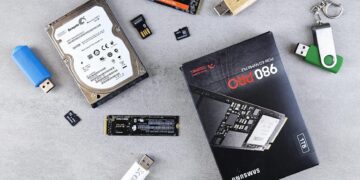
- SSD (Solid State Drive): This is essential. SSDs offer dramatically faster boot times, application loading, and file transfer speeds compared to traditional Hard Disk Drives (HDDs). NVMe SSDs are even faster than SATA SSDs and are common in modern laptops.
- Capacity: 512GB is a reasonable starting point. However, consider that operating systems, development tools, IDEs, SDKs, virtual machines, and project files can consume a lot of space quickly. 1TB or more is highly recommended if your budget allows, especially if you work on multiple large projects or use many virtual environments.
While HDDs are cheaper per gigabyte, their slow speed makes them unsuitable as a primary drive for a development laptop. If you need massive storage for media files or backups, consider an external drive, but your main drive must be an SSD.
Display: Your Window to the Code
You’ll be staring at your screen for hours, so display quality matters more than you might think.
Resolution and Size
A higher resolution means more information can be displayed on screen without scrolling — which is a huge productivity boost for coding. A screen size between 14 and 16 inches generally offers a good balance between portability and screen real estate.
- Full HD (1920 x 1080): The minimum acceptable resolution.
- QHD (2560 x 1440) or 4K (3840 x 2160): Highly recommended for sharper text and more content visible. Here’s especially beneficial when working with dense code or multiple windows.
For macOS users, Apple’s Retina displays on MacBooks offer exceptionally high pixel density, making text appear crisp and clear. On Windows laptops, look for displays with a pixel density of at least 150 pixels per inch (PPI) for a similar sharp experience.
Panel Type and Colour Accuracy
IPS (In-Plane Switching) panels are generally preferred for their good colour accuracy and wide viewing angles — which are important if you ever need to present your work or work with visual design elements. Matte finishes are also a plus, as they reduce glare, making it easier to work in brightly lit environments – common in co-working spaces or near windows.
Keyboard and Trackpad: Your Primary Interaction Points
Here are arguably the most critical components for a developer’s comfort and efficiency. A bad keyboard can lead to fatigue and errors. a great one can feel like an extension of your thoughts.
Keyboard Comfort
Key travel (the distance the key moves down), actuation force (how hard you need to press), and key spacing are Key. Many developers prefer a keyboard with a satisfying tactile feel and decent key travel – think mechanical keyboard-like feedback, but in a laptop form factor. Backlighting is also a must for working in low-light conditions.
Consider trying out keyboards in person if possible, or read detailed reviews that focus In particular on keyboard feel. Brands like Lenovo (ThinkPads are legendary), Dell (XPS series), and Apple (MacBook keyboards have improved significantly) often receive praise for their keyboards.
Trackpad Precision
A responsive and accurate trackpad is vital for navigation, especially when you step away from your desk or don’t have a mouse handy. macOS MacBooks are renowned for their large, precise, and gesture-friendly trackpads. On Windows, look for laptops with Microsoft Precision drivers — which offer a consistent and reliable experience across different manufacturers.
Operating System: The Foundation of Your Workflow
The choice of operating system often depends on your development environment and personal preference. Each has its pros and cons for developers.
- macOS: Widely favoured by many web and mobile developers. It offers a Unix-based terminal, excellent build quality, a polished UI, and strong integration with Apple’s hardware. It’s especially popular for iOS and macOS development.
- Windows: The most versatile option, supporting a vast range of software and hardware. With the advent of the Windows Subsystem for Linux (WSL), Windows now offers a strong Linux environment directly within Windows, making it a powerful choice for almost any type of development. According to Microsoft, WSL allows developers to run GNU/Linux command-line tools directly on Windows, unmodified, at full speed.
- Linux: The open-source darling. Many backend, systems, and data science developers prefer Linux distributions like Ubuntu, Fedora, or Arch Linux for their customisation, performance, and native tooling. You can install Linux directly on hardware or use virtualisation.
Your choice might also be dictated by the platforms you’re developing for. iOS and macOS apps require macOS. Android development can be done on any OS, but emulators often run best on Windows or macOS. Backend development is highly flexible.
Portability and Battery Life: Working On the Go
If you plan to code at coffee shops, attend meetups, or travel, portability and battery life become significant factors.
Weight and Dimensions
Lighter laptops (under 1.5kg) are easier to carry around. Screen size also plays a role. 13-inch and 14-inch laptops are generally more portable than 15-inch or 16-inch models.
Battery Longevity
Modern laptops, especially those with power-efficient processors like Apple’s M-series chips or newer Intel/AMD chips with hybrid architectures, can offer impressive battery life. Aim for a laptop that can realistically last 8+ hours of typical development work if you need to work away from a power outlet. Features like adaptive brightness and power-saving modes can extend battery life.
Specific Recommendations for 2026
While specific models change yearly, certain laptop lines consistently deliver for developers. Here are a few to consider, keeping in mind that availability and configurations vary by region (UK/Europe focus).
Apple MacBook Pro (M2/M3 series)
Pros: Exceptional performance-per-watt, incredible battery life, stunning Retina displays, strong build quality, macOS ecosystem, excellent trackpad and speakers. The M3 Pro and M3 Max chips offer substantial power for demanding tasks.
Cons: Higher price point, limited repairability, macOS only (a pro for some, a con for others).
Ideal for: Mobile (iOS/macOS) developers, web developers, general programming, those already invested in the Apple ecosystem.
Dell XPS 15/17
Pros: Stunning InfinityEdge displays with minimal bezels, powerful Intel processors, dedicated NVIDIA GPUs available, excellent build quality, good port selection for a Windows ultrabook.
Cons: Can get expensive, battery life can be variable depending on configuration and usage, webcam placement in older models was awkward (though improved).
Ideal for: Windows developers needing strong performance, data science, machine learning, general-purpose development.
Lenovo ThinkPad P Series or X1 Carbon
Pros: Legendary keyboard comfort and durability, excellent port selection, strong Linux support, business-grade reliability. The P-series are mobile workstations with ISV certifications for professional applications.
Cons: Design is often more utilitarian than sleek, can be pricier for higher configurations.
Ideal for: Developers prioritizing keyboard comfort, durability, Linux users, enterprise environments, systems programming.
HP Spectre x360 / Envy series
Pros: Premium design, often feature-rich with good displays and comfortable keyboards, competitive pricing for the features offered. The x360 models offer 2-in-1 flexibility.
Cons: Performance can sometimes lag behind competitors in peak loads, battery life can be inconsistent.
Ideal for: Developers looking for a stylish, versatile machine with good all-around performance at a reasonable price.
Beyond the Specs: Other Considerations
Build Quality and Durability
A laptop for development is an investment. You’ll be using it daily for potentially years. Look for sturdy chassis materials (aluminium, magnesium alloy, or high-quality plastics) and a design that can withstand the rigours of being carried around. Reputable brands like Apple, Dell (XPS), Lenovo (ThinkPads), and HP (Spectre/Envy) generally offer good build quality.
Cooling System
When compiling large projects or running intensive tasks, components generate heat. An effective cooling system prevents thermal throttling – where the CPU/GPU slows down to avoid overheating. Laptops with good ventilation and strong fans will maintain performance under load better than those with inadequate cooling. Reviews often mention how well a laptop handles sustained load.
Connectivity (Ports)
Consider the peripherals you use. Do you need USB-A ports for older devices? HDMI for external monitors? An SD card reader? While USB-C/Thunderbolt ports are versatile and increasingly standard, ensure the laptop has the ports you need or be prepared to invest in a good USB hub or docking station. As of 2026, many thin-and-light laptops rely heavily on USB-C, so a hub is often necessary.
Warranty and Support
Especially for business users in Europe, understanding warranty options is important. Manufacturers like Lenovo and Dell offer business-grade support with options for on-site repair — which can be invaluable if your primary work machine goes down. Check the warranty terms carefully. some standard warranties are quite limited.
FAQ: Your Burning Questions Answered
Do I need a powerful graphics card (GPU) for software development?
Generally, no. Unless you’re In particular developing games, doing machine learning/AI model training, or working with 3D rendering, a powerful dedicated GPU isn’t essential. Integrated graphics (like those found in Intel CPUs or standard Apple M-series chips) are sufficient for most IDEs, web development, and general programming tasks. If you do need a GPU, look for NVIDIA GeForce RTX or AMD Radeon RX series cards.
Is a 1080p display good enough for coding?
A 1080p (Full HD) display is the minimum acceptable resolution for coding. It allows you to see a decent amount of code at once. However, higher resolutions like QHD (1440p) or 4K offer sharper text and allow you to fit even more information on the screen — which many developers find greatly enhances productivity.
How much storage should I get on my development laptop?
A minimum of 512GB SSD is recommended for a good laptop for software development. However, 1TB or more is strongly advised if your budget allows. Development tools, operating systems, virtual machines, and project files can consume space rapidly. Faster NVMe SSDs are preferable to SATA SSDs.
Are gaming laptops good for software development?
Gaming laptops often have powerful CPUs and GPUs — which can be beneficial for certain development tasks. However, they typically sacrifice battery life, portability, and can be quite noisy due to their cooling systems. If your development work heavily involves GPU acceleration (like ML/AI), a gaming laptop might be suitable, but for general development, a more balanced machine is usually better.
Should I buy a laptop with a touchscreen?
Touchscreens are generally not a primary requirement for software development. While they can be useful on 2-in-1 convertible laptops for specific tasks or quick navigation, most developers prefer using a mouse or trackpad for detailed work within IDEs and code editors. Prioritise core specs like CPU, RAM, and SSD over a touchscreen if budget is a constraint.
Making Your Final Decision
Choosing a good laptop for software development boils down to understanding your specific needs and balancing them against your budget. Prioritise a fast processor, ample RAM (16GB minimum, 32GB recommended), and a speedy SSD. Don’t skimp on the keyboard and display – these are your primary tools. Whether you lean towards the polished ecosystem of a MacBook or the versatility of a Windows machine with WSL, there’s a powerful option out there for you. Remember to check reviews from reputable sources like RTINGS.com — which provides in-depth laptop testing and reviews, and consider your long-term comfort and productivity. Happy coding!
Related Articles
- 8K Monitor Value: Is It Worth The Upgrade?
- Efficient Data Transfer Resources for Businesses in 2026
- Incogni Discount Code: Slash Your Data Privacy Costs
Editorial Note: This article was researched and written by the Lead Serve Ads editorial team. We fact-check our content and update it regularly. For questions or corrections, contact us.
Last updated: April 25, 2026